
2 U.S. 419 · Judicial power · Federalism · 4 : 1
Chisholm v. Georgia
Can a citizen of one state sue another state in federal court?
Yes. The Court read Article III to allow such suits against a state.
Opinion mapNine seats, 116 justices since 1789 and every recorded justice vote in the imported Supreme Court Database releases. Follow who decided, how they split and what changed.
Verified snapshot: October 30, 2026 · Names of people stay in their original language. Bill, nomination and record titles are translated from the official English record, which remains the authoritative text.
Participating justices decide a case by majority. The opinion of the Court states the legal rule. A dissent binds no one, but it can shape later cases.
576 U.S. 644 · · Due process
Must states license and recognize marriages between two people of the same sex?
Yes. The Fourteenth Amendment requires it under both due process and equal protection.
The holding still applies.
5 in the majority4 dissenting
“No union is more profound than marriage, for it embodies the highest ideals of love, fidelity, devotion, sacrifice, and family.”
Justice Kennedy wrote that the right to marry is fundamental and that excluding same-sex couples denies them equal dignity.
Four justices wrote dissents. Chief Justice Roberts argued the Constitution leaves the definition of marriage to the democratic process.
Same-sex marriage became lawful nationwide. The holding remains in force; the Court declined in 2025 to revisit it.
Summaries are this site's own writing, not the Court's words. Official text in the U.S. Reports (Library of Congress)
Source: Harold J. Spaeth, Lee Epstein, et al. 2026 Supreme Court Database, Version 2026 Release 01 (justice centered, organized by citation) (October 30, 2026) · Library of Congress: United States Reports (official opinions, public domain) (October 30, 2026)
Most cases reach the Court by petition after lower courts have ruled. The justices choose which cases to hear; by the Court's practice, four votes grant review.
After written briefs and oral argument the justices vote in a private conference. A majority of those participating decides.
One justice writes the opinion of the Court. Others may concur or dissent. The holding binds lower courts until the Court or a constitutional amendment changes it.
Judicial review, the power to set aside laws that conflict with the Constitution, dates from Marbury v. Madison in 1803. How the system changed · Judicial review
Source: Harold J. Spaeth, Lee Epstein, et al. 2026 Supreme Court Database, Version 2026 Release 01 (justice centered, organized by citation) (October 30, 2026) · Supreme Court of the United States: The Court as an Institution (October 30, 2026) · National Archives: Constitution (October 30, 2026)
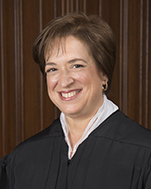
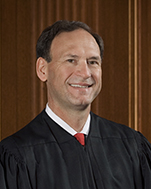
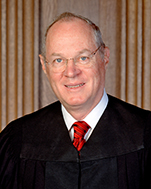
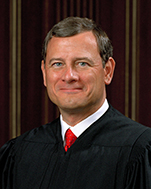
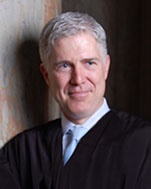
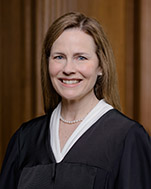
Choose a year to see who sat on the Court. The presiding justice is centred; the others fan out by seniority. Portraits are shown for the sitting justices only.
2026 · 9
Official portrait: Collection of the Supreme Court of the United States · Official source
One column per seat, 1789 at the top. Each bar is one justice's service. Reading down a column shows who replaced whom. Chief justices are outlined. Choose a bar to open the profile.
With the chart focused, use the arrow keys to move between bars and Enter to open a profile.
Every justice since 1789, from the Federal Judicial Center directory and the Court's own list. Open a card for the appointment, the Senate vote, the seat succession and the voting record.
116 / 116
No matching records.
Source: Federal Judicial Center: Biographical Directory of Article III Federal Judges, 1789-present (export) (October 30, 2026) · Supreme Court of the United States: Justices 1789 to Present (October 30, 2026) · Supreme Court of the United States: Biographies of Current Justices and official portraits (October 30, 2026)
One row per term. The bar shows how that term's decided cases split: unanimous, divided, or decided by a single vote. Pins mark landmark cases. Open a term to list its cases.
Sixty-three decisions with plain-language summaries. Votes, authors and joins come from the database record; the summaries are ours.
63 / 63
2 U.S. 419 · Judicial power · Federalism · 4 : 1
Can a citizen of one state sue another state in federal court?
Yes. The Court read Article III to allow such suits against a state.
Opinion map5 U.S. 137 · Judicial power · 6 : 0
Can the Supreme Court refuse to apply an act of Congress that conflicts with the Constitution?
Yes. A law repugnant to the Constitution is void, and courts must say so.
Opinion map17 U.S. 316 · Federalism · 6 : 0
May Congress charter a national bank, and may a state tax it?
Congress may create the bank under its implied powers, and a state may not tax it.
Opinion map22 U.S. 1 · Federalism · Economic activity · 5 : 0
Does a federal coasting license override a state monopoly on steamboat navigation?
Yes. Congress's power over interstate commerce includes navigation, and the federal license prevails.
Opinion map31 U.S. 515 · Federalism · Civil rights · 6 : 0
May Georgia apply its laws inside Cherokee territory?
No. Relations with Indian nations belong to the federal government, so Georgia's laws had no force there.
Opinion map32 U.S. 243 · Due process · Federalism · 6 : 0
Does the Fifth Amendment's takings clause bind city and state governments?
No. The Bill of Rights limited only the federal government.
Opinion map60 U.S. 393 · Civil rights · Federalism · 9 : 0
Could an enslaved man sue for his freedom in federal court, and could Congress bar slavery in the territories?
No on both points. The Court held that people of African descent could not be citizens and struck down the Missouri Compromise restriction.
Opinion map71 U.S. 2 · Criminal procedure · Judicial power · 9 : 0
May a civilian be tried by a military commission where civilian courts are open?
No. Milligan, a civilian in Indiana, was entitled to a civilian trial.
Opinion map83 U.S. 36 · Civil rights · Economic activity · 5 : 4
Did a Louisiana slaughterhouse monopoly violate the new Fourteenth Amendment?
No. The amendment's privileges or immunities clause protected only a narrow set of national rights.
Opinion map88 U.S. 162 · Civil rights · 9 : 0
Did the Fourteenth Amendment give women the right to vote?
No. Citizenship did not by itself include the right to vote, which states could limit to men.
Opinion map109 U.S. 3 · Civil rights · 8 : 1
Could Congress ban racial discrimination by private businesses under the Fourteenth Amendment?
No. The amendment reaches state action, not private conduct, so the 1875 public accommodations law fell.
Opinion map163 U.S. 537 · Civil rights · 7 : 1
Did a Louisiana law requiring separate railway cars for Black and white passengers violate the Fourteenth Amendment?
No. Legally enforced separation was allowed if the facilities were equal.
Opinion map198 U.S. 45 · Economic activity · Due process · 5 : 4
Could New York limit bakers to a sixty-hour work week?
No. The law interfered with the liberty of contract protected by the due process clause.
Opinion map249 U.S. 47 · First Amendment · 9 : 0
Could the government punish leaflets urging resistance to the military draft during wartime?
Yes. Speech creating a clear and present danger of harms Congress may prevent is not protected.
Opinion map268 U.S. 652 · First Amendment · Due process · 7 : 2
Does the First Amendment's protection of speech apply against the states?
The Court assumed that it does, through the Fourteenth Amendment, but still upheld Gitlow's conviction for distributing a socialist manifesto.
Opinion map283 U.S. 697 · First Amendment · 5 : 4
Could a state shut down a newspaper in advance for publishing scandalous material?
No. Prior restraints on publication are the essence of censorship and presumptively unconstitutional.
Opinion map295 U.S. 495 · Economic activity · Federalism · 9 : 0
Could Congress let the President approve industry codes regulating wages, hours and trade practices?
No. The National Industrial Recovery Act delegated legislative power without limits and reached intrastate commerce.
Opinion map300 U.S. 379 · Economic activity · Due process · 5 : 4
Could Washington State set a minimum wage for women?
Yes. The Constitution does not speak of freedom of contract, and the legislature may protect workers from exploitation.
Opinion map317 U.S. 111 · Economic activity · Federalism · 8 : 0
Could federal crop quotas apply to wheat a farmer grew for his own use?
Yes. Even local activity can be regulated if, taken together with similar activity, it substantially affects interstate commerce.
Opinion map323 U.S. 214 · Civil rights · 6 : 3
Could the government exclude Americans of Japanese ancestry from the West Coast during the Second World War?
Yes, by six votes to three. The Court deferred to the military's claim of necessity.
Opinion map343 U.S. 579 · Judicial power · Federalism · 6 : 3
Could President Truman seize the steel mills to avert a strike during the Korean War?
No. The President had no statutory or constitutional authority to take the mills.
Opinion map347 U.S. 483 · Civil rights · 9 : 0
Does racial segregation of public schools violate the equal protection clause?
Yes. Segregated schools are inherently unequal, even if tangible facilities are equal.
Opinion map367 U.S. 643 · Criminal procedure · 6 : 3
May evidence obtained by an unconstitutional search be used in a state criminal trial?
No. The exclusionary rule applies to the states through the Fourteenth Amendment.
Opinion map369 U.S. 186 · Civil rights · Judicial power · 6 : 2
Can federal courts hear a claim that a state's legislative districts are so unequal that they deny equal protection?
Yes. Apportionment challenges are justiciable and not merely political questions.
Opinion map370 U.S. 421 · First Amendment · 6 : 1
Could a public school start the day with a state-composed prayer?
No. Official school prayer violates the establishment clause, even if the prayer is nondenominational and voluntary.
Opinion map372 U.S. 335 · Criminal procedure · 9 : 0
Must a state provide a lawyer to a poor defendant charged with a serious crime?
Yes. The Sixth Amendment right to counsel is fundamental and applies to the states.
Opinion map376 U.S. 254 · First Amendment · 9 : 0
Can a public official win a libel suit over criticism of official conduct without proving the statement was knowingly or recklessly false?
No. The First Amendment requires proof of actual malice.
Opinion map377 U.S. 533 · Civil rights · 8 : 1
Must both houses of a state legislature be apportioned by population?
Yes. The equal protection clause requires districts of substantially equal population.
Opinion map381 U.S. 479 · Privacy · 7 : 2
Could Connecticut forbid married couples to use contraceptives?
No. The law violated a constitutional right of marital privacy.
Opinion map384 U.S. 436 · Criminal procedure · 5 : 4
Must police warn a suspect of the right to remain silent and to a lawyer before custodial questioning?
Yes. Statements obtained without the warnings cannot be used by the prosecution.
Opinion map388 U.S. 1 · Civil rights · Privacy · 9 : 0
Could Virginia criminalize marriage between a white person and a person of another race?
No. The ban violated both equal protection and due process.
Opinion map393 U.S. 503 · First Amendment · 7 : 2
Could a public school suspend students for wearing black armbands to protest the Vietnam War?
No. Student expression is protected unless it materially disrupts schoolwork or invades the rights of others.
Opinion map395 U.S. 444 · First Amendment · 8 : 0
Could Ohio punish a Ku Klux Klan leader for advocating violence at a rally?
No. Advocacy may be punished only when it is directed to inciting imminent lawless action and is likely to produce it.
Opinion map403 U.S. 713 · First Amendment · 6 : 3
Could the government stop newspapers from publishing the classified Pentagon Papers?
No. The government did not meet the heavy burden required to justify a prior restraint.
Opinion map408 U.S. 238 · Criminal procedure · 5 : 4
Did the death penalty as then administered violate the ban on cruel and unusual punishment?
Yes. The sentencing schemes before the Court gave juries unguided discretion and were struck down.
Opinion map410 U.S. 113 · Privacy · 7 : 2
Does the Constitution protect a woman's decision to end a pregnancy?
Yes. The right of privacy covered the abortion decision, subject to increasing state regulation across the trimesters of pregnancy.
Opinion map418 U.S. 683 · Judicial power · 8 : 0
Could the President refuse a subpoena for White House tapes by claiming executive privilege?
No. A general claim of privilege yields to the specific need for evidence in a criminal trial.
Opinion map438 U.S. 265 · Civil rights · 5 : 4
Could a public medical school reserve a fixed number of places for minority applicants?
No to the quota, but race could be one factor among many in admissions.
Opinion map467 U.S. 837 · Judicial power · Economic activity · 6 : 0
When a statute is ambiguous, must courts accept an agency's reasonable interpretation of it?
Yes. Courts defer to a permissible agency reading of an ambiguous law the agency administers.
Opinion map491 U.S. 397 · First Amendment · 5 : 4
Could Texas punish burning the American flag as political protest?
No. Flag burning is expressive conduct protected by the First Amendment.
Opinion map505 U.S. 833 · Privacy · 5 : 4
Should Roe v. Wade be overruled, and were Pennsylvania's abortion restrictions valid?
Roe's central holding was reaffirmed, but the trimester framework was replaced by an undue burden test, and most of the restrictions were upheld.
Opinion map531 U.S. 98 · Civil rights · Judicial power · 5 : 4
Could the Florida recount ordered by the state supreme court continue under the equal protection clause?
No. The recount lacked uniform standards and could not be completed by the federal deadline the Court applied.
Opinion map539 U.S. 558 · Privacy · 6 : 3
Could a state criminalize private consensual sexual conduct between adults of the same sex?
No. The law violated the liberty protected by the due process clause.
Opinion map539 U.S. 306 · Civil rights · 5 : 4
Could a public law school consider race as one factor in admissions to achieve a diverse class?
Yes, if the program is narrowly tailored and individualized.
Opinion map554 U.S. 570 · Civil rights · Criminal procedure · 5 : 4
Does the Second Amendment protect an individual right to keep a handgun at home for self-defense?
Yes. The District's handgun ban and trigger-lock requirement were struck down.
Opinion map558 U.S. 310 · First Amendment · 5 : 4
Could Congress bar corporations and unions from spending their own funds on independent political advertising?
No. Independent expenditures are protected speech regardless of the speaker's corporate identity.
Opinion map561 U.S. 742 · Civil rights · Due process · 5 : 4
Does the Second Amendment right recognized in Heller apply against state and local governments?
Yes. The right is incorporated through the Fourteenth Amendment.
Opinion map567 U.S. 519 · Federalism · Federal taxation · 5 : 4
Could Congress require most Americans to buy health insurance, and condition all Medicaid funds on states expanding the program?
The mandate survived as a tax, but not under the commerce power, and the Medicaid condition was unconstitutionally coercive.
Opinion map570 U.S. 529 · Civil rights · Federalism · 5 : 4
Could the Voting Rights Act still require certain states to get federal approval for voting changes based on a 1960s coverage formula?
No. The coverage formula was unconstitutional because it relied on decades-old data.
Opinion map570 U.S. 744 · Civil rights · Due process · 5 : 4
Could the federal government refuse to recognize same-sex marriages that states had made lawful?
No. Section 3 of the Defense of Marriage Act violated the Fifth Amendment.
Opinion map576 U.S. 644 · Civil rights · Due process · 5 : 4
Must states license and recognize marriages between two people of the same sex?
Yes. The Fourteenth Amendment requires it under both due process and equal protection.
Opinion map585 U.S. 667 · Judicial power · Civil rights · 5 : 4
Was the presidential proclamation restricting entry from several mostly Muslim countries lawful?
Yes. The proclamation fell within the President's statutory authority and survived the challenge under the establishment clause.
Opinion map585 U.S. 296 · Criminal procedure · Privacy · 5 : 4
Does the government need a warrant to obtain months of a person's cell phone location records?
Yes. Accessing historical cell-site records is a search under the Fourth Amendment.
Opinion map588 U.S. 684 · Civil rights · Judicial power · 5 : 4
Can federal courts strike down congressional maps as unconstitutional partisan gerrymanders?
No. Partisan gerrymandering claims present political questions beyond the reach of federal courts.
Opinion map590 U.S. 644 · Civil rights · 6 : 3
Does the ban on sex discrimination in employment protect gay and transgender workers?
Yes. Firing someone for being gay or transgender is discrimination because of sex under Title VII.
Opinion map597 U.S. 215 · Privacy · Federalism · 6 : 3
Does the Constitution protect a right to abortion?
No. Roe v. Wade and Planned Parenthood v. Casey were overruled, and the issue returned to elected representatives.
Opinion map597 U.S. 1 · Civil rights · Criminal procedure · 6 : 3
Could New York require applicants to show a special need before getting a license to carry a handgun in public?
No. The Second Amendment protects carrying a handgun outside the home, and the proper-cause requirement was unconstitutional.
Opinion map597 U.S. 697 · Judicial power · Economic activity · 6 : 3
Could the EPA use the Clean Air Act to require shifting electricity generation away from coal?
No. A decision of such magnitude needs clear congressional authorization, which the statute did not give.
Opinion map600 U.S. 181 · Civil rights · 6 : 2
May universities consider race in admissions to pursue diversity?
No. The Harvard and University of North Carolina programs violated the equal protection clause and Title VI.
Opinion map600 U.S. 570 · First Amendment · Civil rights · 6 : 3
Could Colorado require a website designer to create wedding websites for same-sex couples against her beliefs?
No. Compelling the designer to create expressive work carrying a message she disagrees with violates the free speech clause.
Opinion map601 U.S. 100 · Judicial power · Federalism · 9 : 0
Could a state remove a presidential candidate from its ballot under the insurrection clause of the Fourteenth Amendment?
No. States may not enforce Section 3 against federal officeholders and candidates; that responsibility rests with Congress.
Opinion map603 U.S. 369 · Judicial power · Economic activity · 6 : 2
Must courts defer to an agency's reasonable reading of an ambiguous statute, as Chevron required?
No. Chevron was overruled. Courts must exercise independent judgment about what a statute means.
Opinion map603 U.S. 593 · Judicial power · Criminal procedure · 6 : 3
Is a former President immune from criminal prosecution for acts taken in office?
Partly. There is absolute immunity for core constitutional powers, at least presumptive immunity for other official acts, and no immunity for unofficial acts.
Opinion mapNine seats in order of seniority. Choose a term to see how the justices split and how often each pair voted on the same side.
| Thomas | J. G. Roberts | Alito | Sotomayor | Kagan | Gorsuch | Kavanaugh | Barrett | K. B. Jackson | |
|---|---|---|---|---|---|---|---|---|---|
| Thomas | 82%66 | 94%65 | 56%66 | 56%66 | 88%66 | 85%66 | 88%66 | 50%66 | |
| J. G. Roberts | 82%66 | 85%65 | 68%66 | 71%66 | 88%66 | 94%66 | 91%66 | 62%66 | |
| Alito | 94%65 | 85%65 | 55%65 | 55%65 | 88%65 | 88%65 | 88%65 | 49%65 | |
| Sotomayor | 56%66 | 68%66 | 55%65 | 94%66 | 62%66 | 68%66 | 65%66 | 94%66 | |
| Kagan | 56%66 | 71%66 | 55%65 | 94%66 | 65%66 | 68%66 | 68%66 | 88%66 | |
| Gorsuch | 88%66 | 88%66 | 88%65 | 62%66 | 65%66 | 85%66 | 91%66 | 59%66 | |
| Kavanaugh | 85%66 | 94%66 | 88%65 | 68%66 | 68%66 | 85%66 | 88%66 | 62%66 | |
| Barrett | 88%66 | 91%66 | 88%65 | 65%66 | 68%66 | 91%66 | 88%66 | 59%66 | |
| K. B. Jackson | 50%66 | 62%66 | 49%65 | 94%66 | 88%66 | 59%66 | 62%66 | 59%66 |
Each cell shows the share of cases both justices decided in which they were on the same side, with the number of cases. Agreement means the same side of the judgment in cases both justices decided. It does not mean shared reasoning.
Summaries are this site's own writing, not the Court's words. Justice-level votes come from the Supreme Court Database (SCDB), used non-commercially and credited. Terms outside the imported releases show no data, never zero.
Cases in which the Supreme Court Database flags the justice as in the majority, divided by cases with a known majority or dissent flag. Concurrences count as majority. Dissents and concurrences written are votes of that kind carrying an opinion code. Majority opinions are cases naming the justice as the opinion writer. Agreement means the same side of the judgment in cases both justices decided. It does not mean shared reasoning.
Credit: Harold J. Spaeth, Lee Epstein, et al., Supreme Court Database, Version 2026 Release 01 and Legacy Release 07, used non-commercially under its Creative Commons Attribution-NonCommercial listing.
Last verified:
Source: Harold J. Spaeth, Lee Epstein, et al. 2026 Supreme Court Database, Version 2026 Release 01 (justice centered, organized by citation) (October 30, 2026) · Harold J. Spaeth, Lee Epstein, et al. Supreme Court Database, Legacy 07 (justice centered, organized by citation) (October 30, 2026) · Supreme Court Database: Cite Us (October 30, 2026) · re3data.org: Supreme Court Database (registry entry with data license) (October 30, 2026) · Federal Judicial Center: Biographical Directory of Article III Federal Judges, 1789-present (export) (October 30, 2026) · Supreme Court of the United States: Justices 1789 to Present (October 30, 2026) · Supreme Court of the United States: The Court as an Institution (October 30, 2026) · Supreme Court of the United States: Biographies of Current Justices and official portraits (October 30, 2026) · Library of Congress: United States Reports (official opinions, public domain) (October 30, 2026) · Supreme Court of the United States: Opinions of the Court (October 30, 2026)
2 U.S. 419 · February 18, 1793 · 4 : 1
Can a citizen of one state sue another state in federal court?
Yes. The Court read Article III to allow such suits against a state.
The majority: The justices in the majority read the text of Article III literally: it extends the judicial power to controversies between a state and citizens of another state. The other side: Justice Iredell dissented, arguing that no act of Congress had authorized the suit and that states kept their immunity from being sued. What changed since: The decision was quickly reversed by the Eleventh Amendment, ratified in 1795, which bars such suits. It no longer applies.
Superseded by a constitutional amendment. Official text in the U.S. Reports (Library of Congress)
5 U.S. 137 · February 24, 1803 · 6 : 0
Can the Supreme Court refuse to apply an act of Congress that conflicts with the Constitution?
Yes. A law repugnant to the Constitution is void, and courts must say so.
The majority: Chief Justice Marshall wrote that Marbury had a right to his commission but that the statute letting him sue directly in the Supreme Court exceeded what Article III allows, so the Court could not grant the order. The other side: No justice dissented. What changed since: The decision established judicial review of federal legislation. It remains the foundation of the Court's constitutional role.
The holding still applies. Official text in the U.S. Reports (Library of Congress)
17 U.S. 316 · March 6, 1819 · 6 : 0
May Congress charter a national bank, and may a state tax it?
Congress may create the bank under its implied powers, and a state may not tax it.
The majority: Chief Justice Marshall read the Necessary and Proper Clause broadly: Congress may choose means that are appropriate to its enumerated powers, and federal law is supreme over conflicting state action. The other side: No justice dissented. What changed since: The case remains the leading statement of implied federal powers and of federal supremacy.
The holding still applies. Official text in the U.S. Reports (Library of Congress)
22 U.S. 1 · March 2, 1824 · 5 : 0
Does a federal coasting license override a state monopoly on steamboat navigation?
Yes. Congress's power over interstate commerce includes navigation, and the federal license prevails.
The majority: Chief Justice Marshall defined commerce broadly as intercourse among states, including navigation, and held that a valid federal statute displaces a conflicting state grant. The other side: No justice dissented; Justice Johnson wrote separately, concurring in the judgment. What changed since: The decision anchored the broad modern reading of the Commerce Clause.
The holding still applies. Official text in the U.S. Reports (Library of Congress)
31 U.S. 515 · March 3, 1832 · 6 : 0
May Georgia apply its laws inside Cherokee territory?
No. Relations with Indian nations belong to the federal government, so Georgia's laws had no force there.
The majority: Chief Justice Marshall described the Cherokee Nation as a distinct community under federal protection, so the state conviction of Worcester was void. The other side: Justice Baldwin dissented on jurisdictional grounds. What changed since: The ruling was not enforced by the federal executive, and removal of the Cherokee followed. Its principle of federal primacy in Indian affairs still shapes the law.
The holding still applies. Official text in the U.S. Reports (Library of Congress)
32 U.S. 243 · February 16, 1833 · 6 : 0
Does the Fifth Amendment's takings clause bind city and state governments?
No. The Bill of Rights limited only the federal government.
The majority: Chief Justice Marshall wrote that the first ten amendments were demanded as limits on the new national government, not on the states. The other side: No justice dissented. What changed since: After the Fourteenth Amendment, the Court applied most of the Bill of Rights to the states case by case. The original holding no longer controls.
Superseded by a constitutional amendment. Official text in the U.S. Reports (Library of Congress)
60 U.S. 393 · March 6, 1857 · 9 : 0
Could an enslaved man sue for his freedom in federal court, and could Congress bar slavery in the territories?
No on both points. The Court held that people of African descent could not be citizens and struck down the Missouri Compromise restriction.
The majority: Chief Justice Taney wrote that the Constitution's framers did not include people of African descent as citizens and that Congress lacked power to prohibit slavery in federal territory. The other side: Justices McLean and Curtis dissented, arguing that free Black men had been citizens in several states at the founding and that Congress had long regulated slavery in the territories. What changed since: The Thirteenth and Fourteenth Amendments overturned the decision. It is widely regarded as the Court's gravest error.
Superseded by a constitutional amendment. Official text in the U.S. Reports (Library of Congress)
71 U.S. 2 · April 3, 1866 · 9 : 0
May a civilian be tried by a military commission where civilian courts are open?
No. Milligan, a civilian in Indiana, was entitled to a civilian trial.
The majority: Justice Davis wrote that the Constitution's guarantees apply in war and peace alike, and that military trials of civilians are not allowed where the courts function. The other side: Four justices concurred in the result but argued Congress could have authorized such commissions. What changed since: The case remains a key limit on military jurisdiction over civilians.
The holding still applies. Official text in the U.S. Reports (Library of Congress)
83 U.S. 36 · April 14, 1873 · 5 : 4
Did a Louisiana slaughterhouse monopoly violate the new Fourteenth Amendment?
No. The amendment's privileges or immunities clause protected only a narrow set of national rights.
The majority: Justice Miller wrote that the Reconstruction amendments were aimed at the freed people and did not make the Court a censor of ordinary state economic regulation. The other side: Justices Field, Bradley and Swayne argued that the right to pursue a lawful trade was a privilege of national citizenship the amendment protected. What changed since: The narrow reading of the privileges or immunities clause largely stands, while later cases used the due process and equal protection clauses instead.
The holding still applies. Official text in the U.S. Reports (Library of Congress)
88 U.S. 162 · March 29, 1875 · 9 : 0
Did the Fourteenth Amendment give women the right to vote?
No. Citizenship did not by itself include the right to vote, which states could limit to men.
The majority: Chief Justice Waite wrote that women were citizens but that suffrage had never been treated as a necessary privilege of citizenship. The other side: No justice dissented. What changed since: The Nineteenth Amendment, ratified in 1920, prohibited denying the vote on account of sex. The holding no longer applies.
Superseded by a constitutional amendment. Official text in the U.S. Reports (Library of Congress)
109 U.S. 3 · October 15, 1883 · 8 : 1
Could Congress ban racial discrimination by private businesses under the Fourteenth Amendment?
No. The amendment reaches state action, not private conduct, so the 1875 public accommodations law fell.
The majority: Justice Bradley wrote that the Fourteenth Amendment empowers Congress to correct state laws and officials, not to regulate private individuals. The other side: Justice Harlan dissented, arguing that the Thirteenth and Fourteenth Amendments allowed Congress to secure equal access to public places. What changed since: The state action rule remains. Congress later banned discrimination in public accommodations in 1964 using its commerce power instead.
The holding still applies. Official text in the U.S. Reports (Library of Congress)
163 U.S. 537 · May 18, 1896 · 7 : 1
Did a Louisiana law requiring separate railway cars for Black and white passengers violate the Fourteenth Amendment?
No. Legally enforced separation was allowed if the facilities were equal.
The majority: Justice Brown wrote that separation did not imply inferiority and that the amendment did not aim to abolish social distinctions. The other side: Justice Harlan alone dissented, writing that the law imposed a badge of servitude and that the Constitution tolerates no classes among citizens. What changed since: Brown v. Board of Education rejected the separate but equal doctrine in schools in 1954, and later decisions ended it elsewhere.
Later overruled by the Court. Official text in the U.S. Reports (Library of Congress)
198 U.S. 45 · April 17, 1905 · 5 : 4
Could New York limit bakers to a sixty-hour work week?
No. The law interfered with the liberty of contract protected by the due process clause.
The majority: Justice Peckham wrote that the hours limit was not a genuine health measure and unreasonably restricted the freedom of employer and employee to agree. The other side: Justice Harlan argued the legislature could reasonably find long hours unhealthy. Justice Holmes wrote that the Constitution does not embody a particular economic theory. What changed since: The Court abandoned this approach in the 1930s, notably in West Coast Hotel v. Parrish, and now gives economic regulation wide latitude.
Later overruled by the Court. Official text in the U.S. Reports (Library of Congress)
249 U.S. 47 · March 3, 1919 · 9 : 0
Could the government punish leaflets urging resistance to the military draft during wartime?
Yes. Speech creating a clear and present danger of harms Congress may prevent is not protected.
The majority: Justice Holmes wrote that the character of every act depends on its circumstances, and that wartime leaflets obstructing the draft could be punished. The other side: No justice dissented. What changed since: Brandenburg v. Ohio in 1969 replaced the test with a far stricter one: speech may be punished only if directed to inciting imminent lawless action and likely to produce it.
Later narrowed by the Court. Official text in the U.S. Reports (Library of Congress)
268 U.S. 652 · June 8, 1925 · 7 : 2
Does the First Amendment's protection of speech apply against the states?
The Court assumed that it does, through the Fourteenth Amendment, but still upheld Gitlow's conviction for distributing a socialist manifesto.
The majority: Justice Sanford wrote that a state may punish utterances that endanger the foundations of government, and that it need not wait until the danger is imminent. The other side: Justices Holmes and Brandeis dissented, arguing that the manifesto posed no present danger and that every idea is an incitement. What changed since: The assumption that free speech binds the states became settled law; the deferential standard for punishing speech was later abandoned.
The holding still applies. Official text in the U.S. Reports (Library of Congress)
283 U.S. 697 · June 1, 1931 · 5 : 4
Could a state shut down a newspaper in advance for publishing scandalous material?
No. Prior restraints on publication are the essence of censorship and presumptively unconstitutional.
The majority: Chief Justice Hughes wrote that the remedy for abuse of press freedom is punishment after publication, not an injunction against publishing. The other side: Justice Butler and three colleagues argued the law was a reasonable response to a public nuisance. What changed since: The rule against prior restraints remains central to press freedom and was reaffirmed in the Pentagon Papers case.
The holding still applies. Official text in the U.S. Reports (Library of Congress)
295 U.S. 495 · May 27, 1935 · 9 : 0
Could Congress let the President approve industry codes regulating wages, hours and trade practices?
No. The National Industrial Recovery Act delegated legislative power without limits and reached intrastate commerce.
The majority: Chief Justice Hughes wrote that Congress cannot hand its lawmaking power to the President or private groups without a standard, and that the poultry business in New York was local. The other side: No justice dissented; Justice Cardozo concurred, describing the delegation as running riot. What changed since: The nondelegation principle is still cited, though the Court has rarely struck down a statute on that ground since; the narrow view of interstate commerce was later abandoned.
The holding still applies. Official text in the U.S. Reports (Library of Congress)
300 U.S. 379 · March 29, 1937 · 5 : 4
Could Washington State set a minimum wage for women?
Yes. The Constitution does not speak of freedom of contract, and the legislature may protect workers from exploitation.
The majority: Chief Justice Hughes wrote that liberty under the due process clause is subject to reasonable regulation in the interest of the community. The other side: Justice Sutherland and three colleagues argued the law arbitrarily shifted the cost of poverty onto employers. What changed since: The decision marked the end of the Lochner era. Economic regulations now receive deferential review.
The holding still applies. Official text in the U.S. Reports (Library of Congress)
317 U.S. 111 · November 9, 1942 · 8 : 0
Could federal crop quotas apply to wheat a farmer grew for his own use?
Yes. Even local activity can be regulated if, taken together with similar activity, it substantially affects interstate commerce.
The majority: Justice Jackson wrote that home-grown wheat competes with wheat in commerce by reducing demand, so Congress could reach it. The other side: No justice dissented. What changed since: The case marks the broad reach of the commerce power. Later decisions set outer limits but did not overrule it.
The holding still applies. Official text in the U.S. Reports (Library of Congress)
323 U.S. 214 · December 18, 1944 · 6 : 3
Could the government exclude Americans of Japanese ancestry from the West Coast during the Second World War?
Yes, by six votes to three. The Court deferred to the military's claim of necessity.
The majority: Justice Black wrote that legal restrictions on a single racial group are immediately suspect, but that pressing public necessity could justify the exclusion order. The other side: Justices Roberts, Murphy and Jackson dissented. Murphy called the order racism; Jackson warned that a judicial endorsement would lie about like a loaded weapon. What changed since: In Trump v. Hawaii in 2018 the Court said Korematsu was gravely wrong the day it was decided and has been overruled in the court of history.
Repudiated by the Court in a later opinion. Official text in the U.S. Reports (Library of Congress)
343 U.S. 579 · June 2, 1952 · 6 : 3
Could President Truman seize the steel mills to avert a strike during the Korean War?
No. The President had no statutory or constitutional authority to take the mills.
The majority: Justice Black wrote that the President's power must come from an act of Congress or the Constitution itself; neither authorized the seizure. Justice Jackson's concurrence set out a three-part framework for presidential power. The other side: Chief Justice Vinson and two colleagues argued the President could act to preserve the nation's ability to fight until Congress acted. What changed since: Jackson's framework is the standard tool for judging presidential power against Congress.
The holding still applies. Official text in the U.S. Reports (Library of Congress)
347 U.S. 483 · May 17, 1954 · 9 : 0
Does racial segregation of public schools violate the equal protection clause?
Yes. Segregated schools are inherently unequal, even if tangible facilities are equal.
The majority: Chief Justice Warren wrote for a unanimous Court that separating children by race generates a feeling of inferiority that affects their education and development. The other side: No justice dissented. What changed since: Brown overturned Plessy in education and launched the dismantling of legal segregation. A second decision in 1955 set the remedy standard.
The holding still applies. Official text in the U.S. Reports (Library of Congress)
367 U.S. 643 · June 19, 1961 · 6 : 3
May evidence obtained by an unconstitutional search be used in a state criminal trial?
No. The exclusionary rule applies to the states through the Fourteenth Amendment.
The majority: Justice Clark wrote that without the exclusionary rule the Fourth Amendment would be an empty promise against state officers. The other side: Justice Harlan and two colleagues argued the question had not been briefed and that states should remain free to choose their remedies. What changed since: The rule remains, with later exceptions such as good faith reliance on a warrant.
The holding still applies. Official text in the U.S. Reports (Library of Congress)
369 U.S. 186 · March 26, 1962 · 6 : 2
Can federal courts hear a claim that a state's legislative districts are so unequal that they deny equal protection?
Yes. Apportionment challenges are justiciable and not merely political questions.
The majority: Justice Brennan set out factors for identifying a political question and concluded that an equal protection claim about districting does not fit them. The other side: Justices Frankfurter and Harlan dissented, warning that courts were entering a political thicket without judicial standards. What changed since: The decision opened the way for Reynolds v. Sims and the one person, one vote rule.
The holding still applies. Official text in the U.S. Reports (Library of Congress)
370 U.S. 421 · June 25, 1962 · 6 : 1
Could a public school start the day with a state-composed prayer?
No. Official school prayer violates the establishment clause, even if the prayer is nondenominational and voluntary.
The majority: Justice Black wrote that it is no part of government business to compose official prayers for any group of Americans to recite. The other side: Justice Stewart dissented, arguing that letting children join in a brief prayer did not establish a religion. What changed since: The decision remains the starting point for school prayer cases, though later rulings about private religious expression in schools have narrowed its reach in some settings.
The holding still applies. Official text in the U.S. Reports (Library of Congress)
372 U.S. 335 · March 18, 1963 · 9 : 0
Must a state provide a lawyer to a poor defendant charged with a serious crime?
Yes. The Sixth Amendment right to counsel is fundamental and applies to the states.
The majority: Justice Black wrote that in an adversary system lawyers in criminal courts are necessities, not luxuries, and that a fair trial cannot be had without one. The other side: No justice dissented. What changed since: The decision created the modern public defender obligation and was extended to lesser offenses carrying jail time.
The holding still applies. Official text in the U.S. Reports (Library of Congress)
376 U.S. 254 · March 9, 1964 · 9 : 0
Can a public official win a libel suit over criticism of official conduct without proving the statement was knowingly or recklessly false?
No. The First Amendment requires proof of actual malice.
The majority: Justice Brennan wrote that debate on public issues should be uninhibited, robust and wide open, and that some error must be protected if free speech is to survive. The other side: No justice dissented. Justices Black, Douglas and Goldberg would have gone further and barred such suits entirely. What changed since: The actual malice rule still governs defamation suits by public officials and public figures.
The holding still applies. Official text in the U.S. Reports (Library of Congress)
377 U.S. 533 · June 15, 1964 · 8 : 1
Must both houses of a state legislature be apportioned by population?
Yes. The equal protection clause requires districts of substantially equal population.
The majority: Chief Justice Warren wrote that legislators represent people, not trees or acres, and that the right to vote is diluted when districts differ widely in population. The other side: Justice Harlan dissented, arguing the Fourteenth Amendment was never meant to govern apportionment and that the Court was rewriting state constitutions. What changed since: One person, one vote applies to state legislatures and, through a companion rule, to congressional districts.
The holding still applies. Official text in the U.S. Reports (Library of Congress)
381 U.S. 479 · June 7, 1965 · 7 : 2
Could Connecticut forbid married couples to use contraceptives?
No. The law violated a constitutional right of marital privacy.
The majority: Justice Douglas found the right in the penumbras of several guarantees in the Bill of Rights. Concurring justices located it in the Ninth and Fourteenth Amendments. The other side: Justices Black and Stewart dissented, calling the law silly but constitutional because no text protects a general right of privacy. What changed since: Griswold began the line of privacy and liberty decisions. In Dobbs the Court said its ruling did not cast doubt on this precedent.
The holding still applies. Official text in the U.S. Reports (Library of Congress)
384 U.S. 436 · June 13, 1966 · 5 : 4
Must police warn a suspect of the right to remain silent and to a lawyer before custodial questioning?
Yes. Statements obtained without the warnings cannot be used by the prosecution.
The majority: Chief Justice Warren wrote that custodial interrogation is inherently coercive and that specific warnings are needed to protect the privilege against self-incrimination. The other side: Justices Harlan, White, Stewart and Clark dissented, arguing the rules went beyond the Constitution and would hamper law enforcement. What changed since: The warnings are a constitutional rule reaffirmed in 2000, with exceptions developed in later cases.
The holding still applies. Official text in the U.S. Reports (Library of Congress)
388 U.S. 1 · June 12, 1967 · 9 : 0
Could Virginia criminalize marriage between a white person and a person of another race?
No. The ban violated both equal protection and due process.
The majority: Chief Justice Warren wrote for a unanimous Court that racial classifications aimed at maintaining white supremacy cannot stand, and that marriage is a basic civil right. The other side: No justice dissented. What changed since: The decision ended interracial marriage bans and was relied on in Obergefell v. Hodges.
The holding still applies. Official text in the U.S. Reports (Library of Congress)
393 U.S. 503 · February 24, 1969 · 7 : 2
Could a public school suspend students for wearing black armbands to protest the Vietnam War?
No. Student expression is protected unless it materially disrupts schoolwork or invades the rights of others.
The majority: Justice Fortas wrote that fear of disturbance is not enough to overcome the right to expression, and that the armbands caused no disruption. The other side: Justice Black dissented, arguing the decision ushered in a new era of permissiveness and that schools must control discipline. What changed since: The substantial disruption test still governs, with later cases allowing more regulation of lewd, school-sponsored or drug-related speech.
The holding still applies. Official text in the U.S. Reports (Library of Congress)
395 U.S. 444 · June 9, 1969 · 8 : 0
Could Ohio punish a Ku Klux Klan leader for advocating violence at a rally?
No. Advocacy may be punished only when it is directed to inciting imminent lawless action and is likely to produce it.
The majority: The unsigned opinion overruled Whitney v. California and set the imminence test that protects abstract advocacy of force. The other side: No justice dissented; Justices Black and Douglas concurred separately, rejecting the clear and present danger test altogether. What changed since: The Brandenburg test remains the governing standard for incitement.
The holding still applies. Official text in the U.S. Reports (Library of Congress)
403 U.S. 713 · June 30, 1971 · 6 : 3
Could the government stop newspapers from publishing the classified Pentagon Papers?
No. The government did not meet the heavy burden required to justify a prior restraint.
The majority: A short unsigned opinion announced the result; six justices wrote separately, differing on when, if ever, publication could be enjoined. The other side: Chief Justice Burger and Justices Harlan and Blackmun dissented, criticizing the rushed proceedings and urging deference to the executive on national security. What changed since: The decision confirms the strong presumption against prior restraints on the press.
The holding still applies. Official text in the U.S. Reports (Library of Congress)
408 U.S. 238 · June 29, 1972 · 5 : 4
Did the death penalty as then administered violate the ban on cruel and unusual punishment?
Yes. The sentencing schemes before the Court gave juries unguided discretion and were struck down.
The majority: Five justices each wrote separately; two found capital punishment unconstitutional in all cases, three objected to arbitrary and discriminatory application. The other side: Four justices dissented, arguing the question belonged to legislatures. What changed since: Executions halted nationwide until Gregg v. Georgia in 1976 approved revised statutes with guided discretion.
Later narrowed by the Court. Official text in the U.S. Reports (Library of Congress)
410 U.S. 113 · January 22, 1973 · 7 : 2
Does the Constitution protect a woman's decision to end a pregnancy?
Yes. The right of privacy covered the abortion decision, subject to increasing state regulation across the trimesters of pregnancy.
The majority: Justice Blackmun located the right in the Fourteenth Amendment's concept of liberty and balanced it against state interests in health and potential life. The other side: Justices White and Rehnquist dissented, arguing the Court had invented a right with no constitutional basis and taken the question from the states. What changed since: Planned Parenthood v. Casey modified the framework in 1992. Dobbs v. Jackson Women's Health Organization overruled Roe in 2022.
Later overruled by the Court. Official text in the U.S. Reports (Library of Congress)
418 U.S. 683 · July 24, 1974 · 8 : 0
Could the President refuse a subpoena for White House tapes by claiming executive privilege?
No. A general claim of privilege yields to the specific need for evidence in a criminal trial.
The majority: Chief Justice Burger wrote for a unanimous Court that executive privilege exists but is not absolute, and that the courts decide its scope. The other side: No justice dissented. Justice Rehnquist did not participate. What changed since: President Nixon released the tapes and resigned sixteen days later. The decision remains the leading case on executive privilege.
The holding still applies. Official text in the U.S. Reports (Library of Congress)
438 U.S. 265 · June 26, 1978 · 5 : 4
Could a public medical school reserve a fixed number of places for minority applicants?
No to the quota, but race could be one factor among many in admissions.
The majority: Justice Powell announced the judgment alone. Four justices would have upheld the program entirely; four would have struck it down under the Civil Rights Act. The other side: The Court was split 4 to 1 to 4 with no single majority opinion; Justice Powell's view that diversity could justify considering race controlled. What changed since: Grutter v. Bollinger adopted Powell's reasoning in 2003. Students for Fair Admissions v. Harvard rejected race-conscious admissions in 2023.
Later overruled by the Court. Official text in the U.S. Reports (Library of Congress)
467 U.S. 837 · June 25, 1984 · 6 : 0
When a statute is ambiguous, must courts accept an agency's reasonable interpretation of it?
Yes. Courts defer to a permissible agency reading of an ambiguous law the agency administers.
The majority: Justice Stevens wrote for six justices that policy choices in filling statutory gaps belong to agencies answerable to the President, not to courts. The other side: No justice dissented; three justices did not participate. What changed since: Chevron deference was applied for forty years and overruled in Loper Bright Enterprises v. Raimondo in 2024.
Later overruled by the Court. Official text in the U.S. Reports (Library of Congress)
491 U.S. 397 · June 21, 1989 · 5 : 4
Could Texas punish burning the American flag as political protest?
No. Flag burning is expressive conduct protected by the First Amendment.
The majority: Justice Brennan wrote that the government may not prohibit an idea because society finds it offensive, and that the flag's special place is best preserved by tolerating criticism. The other side: Chief Justice Rehnquist and Justice Stevens wrote dissents describing the flag as a unique national symbol deserving protection. What changed since: Congress passed a federal flag statute, which the Court struck down the next year. The ruling stands.
The holding still applies. Official text in the U.S. Reports (Library of Congress)
505 U.S. 833 · June 29, 1992 · 5 : 4
Should Roe v. Wade be overruled, and were Pennsylvania's abortion restrictions valid?
Roe's central holding was reaffirmed, but the trimester framework was replaced by an undue burden test, and most of the restrictions were upheld.
The majority: Justices O'Connor, Kennedy and Souter wrote a joint opinion stressing stare decisis and the reliance interests built on Roe. The other side: Chief Justice Rehnquist and Justices Scalia, White and Thomas would have overruled Roe entirely; Justices Blackmun and Stevens would have struck down more of the law. What changed since: Dobbs overruled both Roe and Casey in 2022.
Later overruled by the Court. Official text in the U.S. Reports (Library of Congress)
531 U.S. 98 · December 12, 2000 · 5 : 4
Could the Florida recount ordered by the state supreme court continue under the equal protection clause?
No. The recount lacked uniform standards and could not be completed by the federal deadline the Court applied.
The majority: The unsigned opinion found that varying standards for counting ballots violated equal protection; five justices held no constitutional recount was possible in time. The other side: Four justices dissented. Justices Stevens, Souter, Ginsburg and Breyer argued the state court should have been allowed to set standards and finish the count. What changed since: The decision ended the 2000 presidential election contest. The opinion said its consideration was limited to the present circumstances.
The holding still applies. Official text in the U.S. Reports (Library of Congress)
539 U.S. 558 · June 26, 2003 · 6 : 3
Could a state criminalize private consensual sexual conduct between adults of the same sex?
No. The law violated the liberty protected by the due process clause.
The majority: Justice Kennedy wrote that adults are entitled to respect for their private lives and overruled Bowers v. Hardwick from 1986. The other side: Justice Scalia, joined by two colleagues, argued the Court had taken sides in a culture war and that the reasoning undermined many morals laws; Justice Thomas also dissented. What changed since: The decision is a foundation of later rulings on same-sex relationships, including Obergefell.
The holding still applies. Official text in the U.S. Reports (Library of Congress)
539 U.S. 306 · June 23, 2003 · 5 : 4
Could a public law school consider race as one factor in admissions to achieve a diverse class?
Yes, if the program is narrowly tailored and individualized.
The majority: Justice O'Connor wrote that student body diversity is a compelling interest and that the law school's holistic review was permissible, adding that such preferences should no longer be needed in 25 years. The other side: Chief Justice Rehnquist and Justices Scalia, Kennedy and Thomas dissented, arguing the program was a disguised quota. What changed since: Students for Fair Admissions v. Harvard in 2023 held that race-conscious admissions programs of this kind violate equal protection.
Later overruled by the Court. Official text in the U.S. Reports (Library of Congress)
554 U.S. 570 · June 26, 2008 · 5 : 4
Does the Second Amendment protect an individual right to keep a handgun at home for self-defense?
Yes. The District's handgun ban and trigger-lock requirement were struck down.
The majority: Justice Scalia wrote that the amendment protects an individual right unconnected to militia service, while noting the right is not unlimited. The other side: Justice Stevens argued the right was tied to militia service; Justice Breyer argued the District's law was a reasonable response to urban gun violence. What changed since: McDonald v. Chicago extended the right against the states in 2010, and Bruen in 2022 set a history-based test for gun laws.
The holding still applies. Official text in the U.S. Reports (Library of Congress)
558 U.S. 310 · January 21, 2010 · 5 : 4
Could Congress bar corporations and unions from spending their own funds on independent political advertising?
No. Independent expenditures are protected speech regardless of the speaker's corporate identity.
The majority: Justice Kennedy wrote that the government may not suppress political speech on the basis of the speaker's corporate identity, while upholding disclosure requirements. The other side: Justice Stevens, joined by three colleagues, argued that corporations are not people for this purpose and that the ruling threatened the integrity of elections. What changed since: The decision reshaped campaign finance and led to the growth of independent expenditure groups.
The holding still applies. Official text in the U.S. Reports (Library of Congress)
561 U.S. 742 · June 28, 2010 · 5 : 4
Does the Second Amendment right recognized in Heller apply against state and local governments?
Yes. The right is incorporated through the Fourteenth Amendment.
The majority: Justice Alito wrote that the right to keep and bear arms is fundamental to the American scheme of ordered liberty; Justice Thomas reached the result through the privileges or immunities clause. The other side: Justices Stevens and Breyer wrote dissents, arguing that the right should not be imposed on states with different local conditions. What changed since: State and local gun laws are now reviewed under the Second Amendment.
The holding still applies. Official text in the U.S. Reports (Library of Congress)
567 U.S. 519 · June 28, 2012 · 5 : 4
Could Congress require most Americans to buy health insurance, and condition all Medicaid funds on states expanding the program?
The mandate survived as a tax, but not under the commerce power, and the Medicaid condition was unconstitutionally coercive.
The majority: Chief Justice Roberts wrote that the commerce power does not reach inactivity but that the penalty could be read as a tax; seven justices found the Medicaid expansion coercive. The other side: Four justices would have struck down the whole law; four others would have upheld the mandate under the commerce power. What changed since: The Affordable Care Act remained in force with Medicaid expansion optional for states.
The holding still applies. Official text in the U.S. Reports (Library of Congress)
570 U.S. 529 · June 25, 2013 · 5 : 4
Could the Voting Rights Act still require certain states to get federal approval for voting changes based on a 1960s coverage formula?
No. The coverage formula was unconstitutional because it relied on decades-old data.
The majority: Chief Justice Roberts wrote that the formula no longer reflected current conditions and violated the equal sovereignty of the states. The other side: Justice Ginsburg, joined by three colleagues, argued that preclearance was still working and that throwing it out was like discarding an umbrella in a rainstorm because you are not getting wet. What changed since: Preclearance stopped operating. Congress has not enacted a new formula.
The holding still applies. Official text in the U.S. Reports (Library of Congress)
570 U.S. 744 · June 26, 2013 · 5 : 4
Could the federal government refuse to recognize same-sex marriages that states had made lawful?
No. Section 3 of the Defense of Marriage Act violated the Fifth Amendment.
The majority: Justice Kennedy wrote that the law's purpose and effect were to demean couples whose marriages their states recognized. The other side: Chief Justice Roberts and Justices Scalia, Thomas and Alito dissented, questioning the Court's jurisdiction and the reasoning. What changed since: Two years later Obergefell v. Hodges required all states to license same-sex marriages.
The holding still applies. Official text in the U.S. Reports (Library of Congress)
576 U.S. 644 · June 26, 2015 · 5 : 4
Must states license and recognize marriages between two people of the same sex?
Yes. The Fourteenth Amendment requires it under both due process and equal protection.
The majority: Justice Kennedy wrote that the right to marry is fundamental and that excluding same-sex couples denies them equal dignity. The other side: Four justices wrote dissents. Chief Justice Roberts argued the Constitution leaves the definition of marriage to the democratic process. What changed since: Same-sex marriage became lawful nationwide. The holding remains in force; the Court declined in 2025 to revisit it.
The holding still applies. Official text in the U.S. Reports (Library of Congress)
585 U.S. 667 · June 26, 2018 · 5 : 4
Was the presidential proclamation restricting entry from several mostly Muslim countries lawful?
Yes. The proclamation fell within the President's statutory authority and survived the challenge under the establishment clause.
The majority: Chief Justice Roberts wrote that the immigration statute grants the President broad discretion and that the policy was plausibly related to national security. The other side: Justice Sotomayor, joined by Justice Ginsburg, argued the proclamation was motivated by anti-Muslim animus; Justice Breyer also dissented. What changed since: The majority took the occasion to say Korematsu was gravely wrong and overruled in the court of history.
The holding still applies. Docket on supremecourt.gov
585 U.S. 296 · June 22, 2018 · 5 : 4
Does the government need a warrant to obtain months of a person's cell phone location records?
Yes. Accessing historical cell-site records is a search under the Fourth Amendment.
The majority: Chief Justice Roberts wrote that the records give a detailed chronicle of a person's movements and that the third-party doctrine does not fit this kind of data. The other side: Justices Kennedy, Thomas, Alito and Gorsuch each dissented, variously arguing the records belong to the carrier or that the Court's test lacks a textual basis. What changed since: The decision adapts Fourth Amendment doctrine to digital records held by companies.
The holding still applies. Docket on supremecourt.gov
588 U.S. 684 · June 27, 2019 · 5 : 4
Can federal courts strike down congressional maps as unconstitutional partisan gerrymanders?
No. Partisan gerrymandering claims present political questions beyond the reach of federal courts.
The majority: Chief Justice Roberts wrote that there is no judicially manageable standard for deciding how much partisan advantage is too much. The other side: Justice Kagan, joined by three colleagues, argued that courts had workable standards and that the decision left voters without a federal remedy. What changed since: Challenges to partisan maps now proceed in state courts under state constitutions, or through legislation.
The holding still applies. Docket on supremecourt.gov
590 U.S. 644 · June 15, 2020 · 6 : 3
Does the ban on sex discrimination in employment protect gay and transgender workers?
Yes. Firing someone for being gay or transgender is discrimination because of sex under Title VII.
The majority: Justice Gorsuch wrote that an employer who fires a person for traits it would tolerate in someone of another sex discriminates because of sex, whatever the drafters expected. The other side: Justices Alito, Thomas and Kavanaugh dissented, arguing the Court was updating the statute rather than interpreting it. What changed since: Federal employment protection extends to sexual orientation and gender identity.
The holding still applies. Docket on supremecourt.gov
597 U.S. 215 · June 24, 2022 · 6 : 3
Does the Constitution protect a right to abortion?
No. Roe v. Wade and Planned Parenthood v. Casey were overruled, and the issue returned to elected representatives.
The majority: Justice Alito wrote that the right is not mentioned in the Constitution and not deeply rooted in the nation's history, so earlier decisions were egregiously wrong. Chief Justice Roberts concurred in the judgment only. The other side: Justices Breyer, Sotomayor and Kagan jointly dissented, arguing the decision discarded a half century of precedent and the liberty of women. What changed since: Abortion law now varies by state. Several states amended their constitutions in the following years.
The holding still applies. Docket on supremecourt.gov
597 U.S. 1 · June 23, 2022 · 6 : 3
Could New York require applicants to show a special need before getting a license to carry a handgun in public?
No. The Second Amendment protects carrying a handgun outside the home, and the proper-cause requirement was unconstitutional.
The majority: Justice Thomas wrote that gun regulations must be consistent with the nation's historical tradition of firearm regulation, rejecting a balancing approach. The other side: Justice Breyer, joined by Justices Sotomayor and Kagan, argued the history-only test ignores the realities of gun violence. What changed since: Courts now test gun laws against historical analogues; the Court refined the method in 2024 in United States v. Rahimi.
The holding still applies. Docket on supremecourt.gov
597 U.S. 697 · June 30, 2022 · 6 : 3
Could the EPA use the Clean Air Act to require shifting electricity generation away from coal?
No. A decision of such magnitude needs clear congressional authorization, which the statute did not give.
The majority: Chief Justice Roberts applied what he called the major questions doctrine: agencies need clear authorization for actions of vast economic and political significance. The other side: Justice Kagan, joined by Justices Breyer and Sotomayor, argued the statute's text gave the agency the authority and that the Court had invented a doctrine to limit it. What changed since: The major questions doctrine is now an established constraint on broad agency action.
The holding still applies. Docket on supremecourt.gov
600 U.S. 181 · June 29, 2023 · 6 : 2
May universities consider race in admissions to pursue diversity?
No. The Harvard and University of North Carolina programs violated the equal protection clause and Title VI.
The majority: Chief Justice Roberts wrote that the programs lacked measurable goals, used race negatively and had no end point, while applicants may still describe how race affected their lives. The other side: Justices Sotomayor and Jackson wrote dissents, arguing the decision ignores persisting racial inequality; Justice Kagan joined them. What changed since: Race-conscious admissions programs of this kind ended; Grutter no longer controls.
The holding still applies. Docket on supremecourt.gov
600 U.S. 570 · June 30, 2023 · 6 : 3
Could Colorado require a website designer to create wedding websites for same-sex couples against her beliefs?
No. Compelling the designer to create expressive work carrying a message she disagrees with violates the free speech clause.
The majority: Justice Gorsuch wrote that the websites were pure speech and that the state cannot force a speaker to express a message. The other side: Justice Sotomayor, joined by Justices Kagan and Jackson, argued the decision for the first time allowed a business open to the public to refuse service to a protected class. What changed since: The decision limits how public accommodations laws apply to custom expressive services.
The holding still applies. Docket on supremecourt.gov
601 U.S. 100 · March 4, 2024 · 9 : 0
Could a state remove a presidential candidate from its ballot under the insurrection clause of the Fourteenth Amendment?
No. States may not enforce Section 3 against federal officeholders and candidates; that responsibility rests with Congress.
The majority: The unsigned opinion for the Court held that allowing states to act would create a patchwork; five justices added that enforcement requires federal legislation. The other side: No justice dissented. Justices Sotomayor, Kagan and Jackson, and separately Justice Barrett, concurred in the judgment but said the Court decided more than necessary. What changed since: Colorado's removal order was reversed and the candidate remained on the ballot nationwide.
The holding still applies. Docket on supremecourt.gov
603 U.S. 369 · June 28, 2024 · 6 : 2
Must courts defer to an agency's reasonable reading of an ambiguous statute, as Chevron required?
No. Chevron was overruled. Courts must exercise independent judgment about what a statute means.
The majority: Chief Justice Roberts wrote that the Administrative Procedure Act directs courts to decide legal questions themselves and that Chevron had proved unworkable. The other side: Justice Kagan, joined by Justices Sotomayor and Jackson, argued that agencies have expertise that courts lack and that the decision grasped power for the judiciary. What changed since: Courts no longer defer to agency interpretations under Chevron; earlier decisions that relied on it remain unless separately challenged.
The holding still applies. Docket on supremecourt.gov
603 U.S. 593 · July 1, 2024 · 6 : 3
Is a former President immune from criminal prosecution for acts taken in office?
Partly. There is absolute immunity for core constitutional powers, at least presumptive immunity for other official acts, and no immunity for unofficial acts.
The majority: Chief Justice Roberts wrote that the President must be able to act without fear of prosecution, and sent the case back to sort official from unofficial conduct. The other side: Justice Sotomayor, joined by Justices Kagan and Jackson, argued the decision makes the President a king above the law; Justice Jackson also wrote separately. What changed since: The ruling set the framework for prosecuting a former President; the underlying federal case was later dismissed after the 2024 election.
The holding still applies. Docket on supremecourt.gov